
Sensuous Intelligence
On developing taste, honest objects, and optimization

Think of the person whose taste you trust. This could be a friend or a professional — the one you call for a restaurant recommendation, the designer you bring in before you commit to your kitchen renovation. Their opinion is reliable because their opinions are grounded in sustained engagement with the thing. They’ve put in real time. They have sensuous intelligence.
The trusted tastemaker is valuable because their interests are aligned with yours. They want you to have the right thing. Your dissatisfaction would cost them something, soulfully.
The trust has been earned through willingness to defend an unfashionable position, through aesthetic choices that reveal a genuine internal logic rather than a responsiveness to external pressure. Once earned, it creates a particular relationship between the tastemaker and their audience: the audience extends creative latitude in exchange for the tastemaker’s continued commitment to their own standards.
The brands — often described as “lifestyle” or “heritage” — that best illustrate sensuous intelligence are tastemakers their audiences trust enough to follow into unfamiliar territory. Some examples I particularly enjoy returning to for visual inspiration:
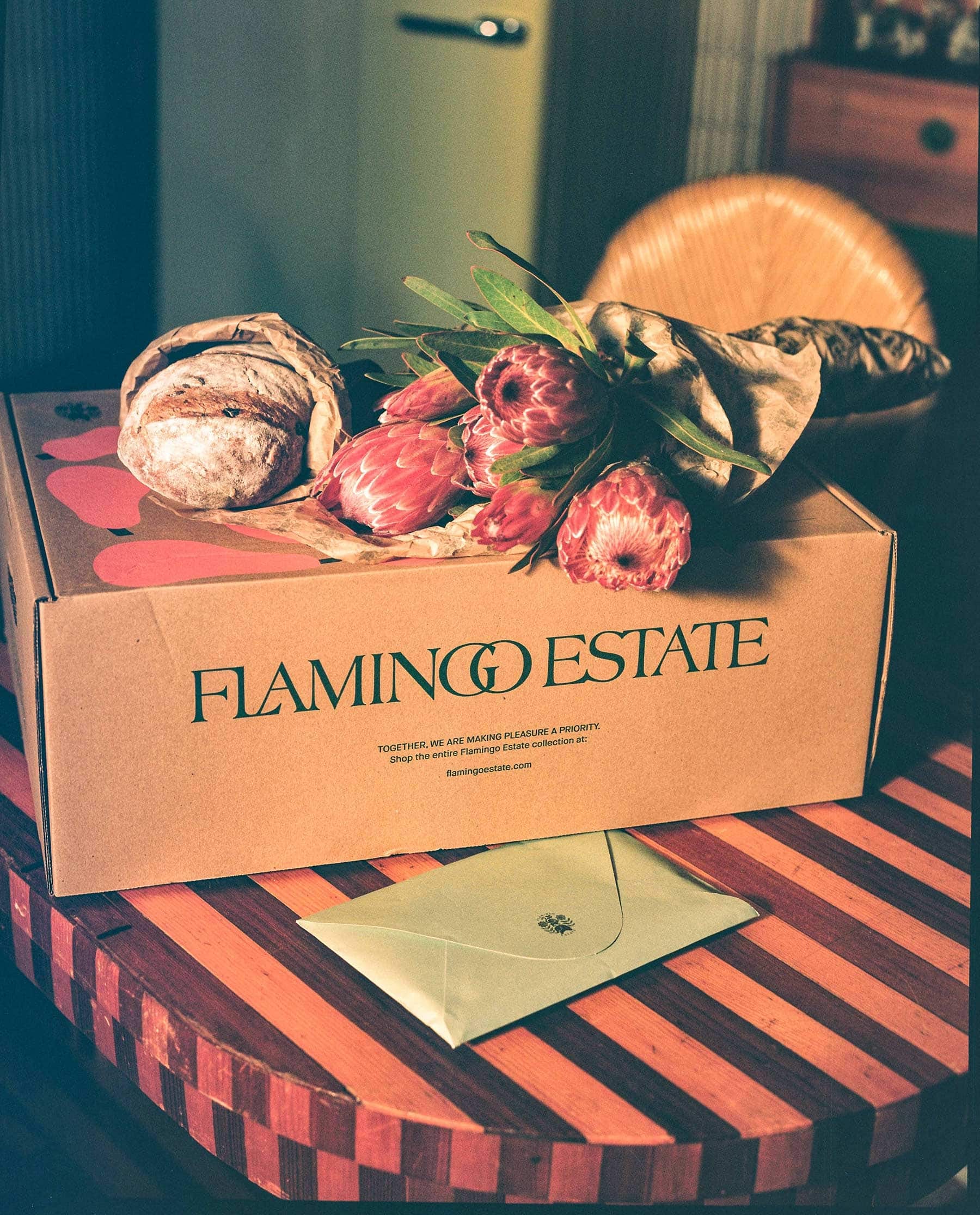
Flamingo Estate sells olive oil alongside candles alongside flower subscriptions and farm boxes.

Gohar World sells artfully-curated tableware.
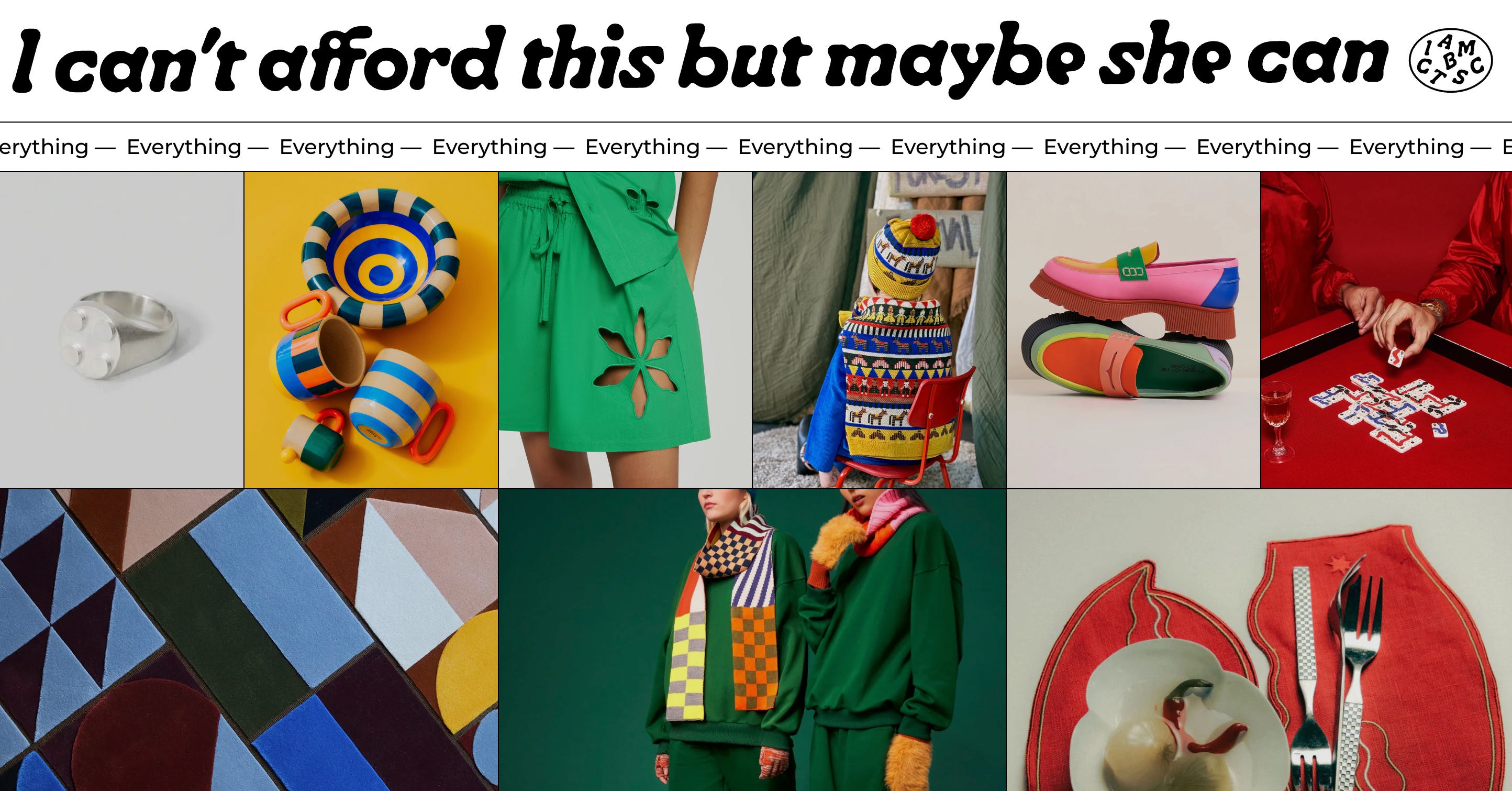
This website.
The slow-anything movements — slow food or fashion, quiet luxury, the resurgence of the handmade — these are born of sensuous intelligence operating as pushback against being sold to, even while selling themselves.
The brands that maintain trust with this audience are the ones that hold their aesthetic commitments even when the economics make it uncomfortable to do so. We trust that these brands are not going to pivot into down-market categories, as a compromise on quality and taste would be an affront to their ethics.
Honest Making / Dishonest Making
Puffery is the legal term for marketing claims so obviously exaggerated that no reasonable person would believe them. “The world’s best cup of coffee” is not a lie because no one except Buddy, the elf, believes it. The inflation cancels itself out.
But “Handcrafted.” “Heritage.” “Artisanal.” “Solid wood.” These words are not puffery. They are specific enough to sound meaningful and vague enough to mean almost nothing, and they can be legally applied to almost any product by almost any manufacturer. While the words imply things made with genuine care, by people with genuine skill, using genuine materials, in actuality, they circulate freely detached from any of those conditions.
This is the greenwashing of quality, which I wrote about extensively in this book (shameless plug).
It works because most people have no firsthand relationship with how things are made. This isn’t a failure on the part of the consumer — it’s the predictable consequence of a supply chain that has the opportunity to deliberately obscure its own workings thanks to the internet. Also, people are simply busy doing other things. When you don’t spend your days sourcing or making furniture, “solid wood construction” is a phrase you can’t evaluate.
* * *
Anyone who works in design will roll their eyes when a client has Restoration Hardware on their mood board because we know we can get you something of better quality for the price point. (Or, dude, less).


A brand like Restoration Hardware understands exactly what they’re doing. They deploy the vocabulary and aesthetics of heritage craftsmanship, but their actual quality is anything but. They are not confused about the gap between their presentation and their product. The gap is what the brand fills in — the story, the hefty catalogue, the architecture of the galleries, the lighting, the language of provenance and tradition, the $200/year “design service.” Every element of the purchasing experience communicates that what you are purchasing is a luxury. The brand deliberately obscures the reality of the furniture it sells.
Ikea, by contrast, doesn’t pretend to be something it isn’t. Its honesty about what it is — functional, affordable, designed with real intelligence within real constraints — is part of its integrity. You know what you’re getting. The flat-pack and assembly-required is an explicit acknowledgment of the economics. No vocabulary is borrowed from a tradition the brand hasn’t earned. The brand, product and its prices, by extension, are honest.
At the bottom of the barrel: Temu, a showcase for the cheap end of Chinese manufacturing, where the image-to-object gap has become so normalized that buyers have largely stopped expecting the object to match the photograph at all. This gap is arguably large enough to function as disclosure. Visual puffery, in this case, has become a laughable part of the brand.
The population most affected by all of this is white collar suburbanites who do most of their shopping online - the people who have accumulated enough aesthetic vocabulary to recognize the signifiers of quality but not enough sustained exposure to the genuine article to see through their simulation or are merely overwhelmed by a bombardment of advertisements and its accompanying decision fatigue. People reaching toward the honest object, intercepted by highly produced versions of them.
* * *
Let’s complicate things: Is a Hermès bag an honest object? That’s tricky.
It is a Veblen good — its desirability increases with its price, and the price is partly what it’s selling, like a stock. The waiting lists, the allocation system, the mechanisms that maintain scarcity all inflate the object’s meaning beyond what the craft alone sustains. But underneath the Veblen dynamic there is a genuine product.
The leather is what it claims to be. The construction takes what it takes. The skills required are real and not easily approximated. Remove the status premium and you still have an object that justifies a serious price through a serious process.
There is also a dimension of the Birkin specifically that the aesthetic or status-signaling discourse misses. Women’s accumulation of independent wealth — not mediated by a husband, a bank, an institution with the power to revoke access — has historically been difficult in ways the current moment tends to underestimate. A $30,000 Birkin is internationally recognized, portable, liquid in the right rooms, and holding or appreciating in value. The woman converting income into a collection of them is making a financial decision that the standard frameworks for discussing luxury objects don’t have adequate language for.
* * *
In recent years, Italian authorities investigated a number of luxury brands for affixing “Made in Italy” labels to goods produced in Chinese factories. Several prominent fashion houses were implicated.
“Made in Italy” carries real cultural weight because Italian culture has a genuine, longstanding association with craft — the tradition behind it is real. But the label had been functioning for years as a marketing instrument rather than a genuine guarantee, and the brands that got caught were exploiting the distance between those two things.
They had also noticed something the label’s mythology preferred to ignore: China’s manufacturing sector is enormous and internally varied. It produces vast quantities of cheap goods — the Temu end is real — but it also produces extraordinary quality across textiles, ceramics, and precision manufacturing. That quality rarely makes it to Western markets, and has spent decades on the wrong end of an anti-Chinese manufacturing PR campaign that conflated the cheapest tier with the whole.

The implicated Italian brands were, in their own cynical way, acknowledging this. They were using Chinese factories because the output was good and the economics were favorable, then covering the origin with a label that invoked a different story entirely.
“Made in America,” by contrast, has held up as a quality signal not primarily because American culture has a deep association with high culture — fast food is aggressively American-branded, and it is the opposite of a quality signal — but because the economics of domestic manufacturing have functioned as a natural barrier to entry. It’s expensive enough to produce here that a floor exists by default. The interesting threat to that label isn’t cheaper imports. It’s domestic manufacturing becoming cheaper, which would let low-quality producers in under the same “Made in America” flag and erode it from inside.
At some point in the life of almost every brand that begins with genuine principles, capital accumulation starts to compete with quality as an organizing value. It’s the brands that are not only able to resolve this invisibly, absorbing costs, say, when unexpected tariffs are thrust upon them, but insists upon doing so, that develops trust with its consumer and earns tastemaker status. Hermès artistic director Pierre-Alexis Dumas, explained it to 60 minutes, as the difference between making an expensive product versus a costly one. Expensive refers only to the price the consumer pays, which can be inflated well beyond the cost to produce the goods, whereas costly refers to what it costs the designer or brand to produce the quality of the good to begin with.
* * *
There is currently no quality construction labeling standard in the luxury home furnishings or fashion market. The consumer who doesn’t know how to evaluate stitching, eight-way hand ties, or know to feel underneath a table and check its joinery are forced to rely on the faux sensuous intelligence spoon-fed by good branding and a hefty price tag, which leads to cynical consumers who feel ripped off.
Anti-tipping requirements for children’s furniture — a safety standard that mandates physical testing before a product can be sold is as close as it gets. It established the precedent that specific claims about a product’s properties can be regulated and enforced.
It’s also worth noting what happens when labeling standards do exist, even imperfect ones. Labels like “organic” on produce or “Energy star” on appliances or “FSC-certified” on clothing and furnishings have done something beyond their immediate regulatory function: they’ve introduced into consumer consciousness a framework for thinking about environmental health and responsibility. The label creates a category. The category creates a question people start asking even when the label isn’t there — especially when the label isn’t there. A quality construction standard for home furnishings would do the same thing.
But right now, “Handcrafted” is self-certified. “Heritage” is self-certified. “Solid wood” has an FTC definition permitting enough qualification that a piece can be described as solid wood if its major surfaces are solid wood, regardless of what’s underneath. I don’t think that is good enough. The consumer’s only recourse is accumulated experience — meaning the people who figure out what they’re actually buying are the ones who could afford to make expensive mistakes, hire experts, or keep trusted tastemakers with sensuous intelligence in their orbit. This is, in the end, a class-stratified activity. The conditions for developing sensuous intelligence or knowing enough to identify and rely on experts — sustained exposure to honest objects, the leisure to look closely, the financial cushion to be wrong — are not equally distributed.
Optimized and Reclaimed
I went to film school during peak prestige TV. That was where all of the serious jobs were, they would tell us, while we studied Buñuel and Hitchcock (the kind of filmmaking that was done with, they said). We attended watch parties for episodes of Breaking Bad and True Detective. Netflix and Amazon Studios were in their prime and on the rise: the hierarchy had shifted and the future was in short form. We just wouldn’t know yet how short — how optimized — it could get.
* * *
This is happening in other forms of entertainment as well. Sports! Basketball has been subjected to extraordinary analytical attention for two decades. Every decision is now data-informed in ways the coaches of thirty years ago couldn’t have imagined. The games have been optimized — better decisions, by the metrics, than have ever been made. This optimization is also to blame for making games less interesting to watch. (So I’m told by my fiance, an expert-sports fan, whose sensuous intelligence on the subject I trust)
The human struggle, the error and its correction, the player doing something their instincts demanded even when the analytics argued against it — their sensuous intelligence, taking over — these were the inefficiencies. They were also what made watching fun. It’s optimizing past the point of enjoyment.
* * *
The optimized version of cinema is a franchise. The argument is that Pre-existing IP guarantees a pre-captured audience. The sequel doesn’t need to be good in the way a new thing needs to be good to prove itself — it needs to be sufficient, to clear the bar of the audience’s existing investment. Novelty is the variable that gets engineered out first, because it’s risky, inefficient. There is no shortage of creativity and originality and new ideas, but a shortage of studios willing to bet on them.
The Alamo Drafthouse was designed, from its founding, around a single proposition: reclaim the cinema experience — The idea that watching a film together in a room is a worthwhile event. Before every screening, they play a video in which someone yells at you to turn off your phone or you will be ejected from the theater. The entire company is organized around de-centering mobile technology and recentering the collective experience of a film on the big screen in the dark. It’s a brand with a coherent argument, maintained across every operational choice.
Up until a month ago, their concession ordering system was also analogue. You wrote what you wanted to order on a little white card and slipped it into a rail along the edge of the tiny table, thoughtfully designed with just enough dim lighting to read the menu in your lap. A server scurried over, retrieved it, silently, in the dark, without interrupting the film. Knowing how this worked was a small initiation into a specific cinephile culture. The analog friction was the point — a signal that the experience here was being protected from the forces organizing every other hospitality interaction around frictionlessness and speed.
They recently replaced this with mobile ordering, not a small operational change. It is the brand contradicting its own ethic, revoking its promise to its passionate consumer base. By optimizing the ordering experience, they have unraveled the coherence that made the brand worth anything in the first place and killed what set them apart from your run-of-the-mill movie house.
* * *
Director Wes Anderson is an interesting example of someone who has thought carefully about where to compromise and where not to.
He makes films at a density of craft that the current theatrical release window can barely support economically. His response has not been to compromise his sensuous intelligence. It has been to make short films for Netflix with his same, signature attention to every twee detail. The short format generates catalogue content for Netflix in an era of decreasing attention spans. For Anderson, it generates the financial headroom to make his films uncompromisingly in the ways he deems important. He has found where his values and the system’s values overlap, and he works from there.
He is not refusing to engage with the commercial reality of the times. His compromise on runtime and distribution is survivable, adaptable. The compromise on the image, the production design, the casting, however would be altering what the work is fundamentally.
Anderson’s Henry Sugar was a test - do we like 39 minute films? It’s worth noting that the rule of thumb to make tv shows in half hour or hour-with-commercial-break increments and for films to run about 90-some minutes was a form of optimizing for the human attention span, long before streaming, AI, or other digital interferences that erroded our attention spans to the point of common discourse. Optimization isn’t inherently a bad thing, but it is being weaponized.
* * *
Hermès has been commissioning handmade animated films for years. Artists including Annie Choi, Klaus Kremmerz, Alice Charbin, Igor Bastidas, Guillaume Dégé, and Mike Perry have each brought a distinct visual language to campaigns executed with the same philosophy: full creative investment in the making, hand-drawn animation, honoring of art and craftsmanship.
These are the logical extension of Hermès as a brand with sensuous intelligence — that how something is made is part of what it means, and that the time and skill are not merely inputs but are present in the output. An AI-generated image cannot fake this because it has no stake in the outcome, it has no sensuous intelligence.
This positions Hermès, and institutions organized around similar values, as custodians of handmade visual culture at exactly the moment when handmade visual culture becomes rare. They didn’t plan for this. Their preexisting values simply constitute the thing the current moment is making scarce. And they were already scarce, even if much of that scarcity was contrived.
* * *
Every art form, when it reaches peak commercialization, begins shedding its casual audience. Less we forget that going to see a Shakespeare play was, at one point, mass-market entertainment. Now, seeing a film about the making of Hamlet is a signifier of highfalutin taste. That is an art form in maturation.
The commercial substrate — the population whose loose interest in the form make it financially viable at scale, ultimately flatten the form, leading to stagnation. The broad audience’s investment is never deep; their passive consumption of entertainment holds no conviction about what a form should or could be. Brands run into trouble when they begin relying on the passive, casual consumer at the cost of their promises to fans, artists, and craftsmen who built the form to begin with and will continue to carry it long after it’s crashed out from over optimization.
When the optimized version prioritizes maintaining the status quo, the casual consumer eventually get bored and the true fans riot. When the casual consumers stop showing up and consuming, it looks from the outside like the death of the form. But it is actually what clears the space for the committed audience to take over and reclaim the medium. The form that emerges isn’t a return to an earlier version of itself and it’s not without casualties, but it’s more fully itself than it was at peak commercialization — It’s developed by and for people who value sensuous intelligence.